Showing posts with label smartphone. Show all posts

Saturday, 11 April 2015

Samsung Galaxy S6 vs HTC One M9: Which handset should you choose?

By 


Samsung Galaxy S6 vs HTC One M9: Which handset should you choose?

Mobile World Congress was about two things: HTC and Samsung. Both launched new flagship devices, with similar launch dates, looking to dominate 2015 with new devices.
We've now lived with both devices, so to help you decide which it worth your money we're pitching them head to head. Should you choose the HTC One M9 or is theSamsung Galaxy S6 that's going to be your handset for the next year or more?
Be sure to read our Samsung Galaxy S6 review or our HTC One M9 review if you want much more detail on both of these handsets.

Design: Samsung changes, HTC refines

HTC had a design hit with the HTC One M8 and has kept much of the looks for theHTC One M9. But it isn't the same, it's been refined to the nth degree. There's precision and a quality of finish that's rare, making this a luxury metal handset. 
Samsung knew it had to change, and it really did. A metal frame houses Gorilla Glass 4 front and rear panels. It's a big change for Samsung in terms of design, showing it's responding to criticism at this flagship level. 
Of the two, the change from Samsung is the more dramatic, the SGS6 is the device that brings a new look for the brand, where HTC could be accused of resting on its laurels. The Samsung feels new, the HTC feel familiar.
The Samsung Galaxy S6 measures 143.4 x 70.5 x 6.8mm and weighs 138g. The HTCOne M9 is larger and heavier, coming in at 144.6 x 69.7 x 9.61mm and weighing 157g. We'd hand this one to Samsung: it feels more original this time around, but there's no denying the quality and attention to details from HTC.

Core power: Samsung goes homebrew

Both HTC and Samsung offer octo-core 64-bit chipsets in the new handsets. HTC has used Qualcomm Snapdragon 810, with 3GB of RAM. 
Samsung has made the decision to make a departure from Qualcomm, instead using its own Exynos hardware for the processor. Exynos has been used in some markets, and some devices, previously with good results. Again, there's 3GB ofRAM
Of the two devices, the Samsung feels faster. HTC has some elements of it's user interface that are slicker, but when it comes to things like opening big games or just starting up the phone, Samsung takes the lead.

Battle of the battery

In a change from previous years, the Samsung Galaxy S6 is now a sealed unit, meaning you can no longer swap the battery out. The Samsung Galaxy S6 has a 2550mAh battery. The HTC One M9, however, has a larger 2840mAh battery. There's not a lot in it, but HTC has the higher capacity.
The Samsung Galaxy S6 offers wireless charging built-in, which HTC doesn't, although both offer fast charging, with Samsung claiming to offer the fastest charging battery around. 
Neither device is a step forward over previous years, but it's HTC that the slightly better performance in the battery department. The Samsung will falter first on heavy days, but in lighter use, both will make it through the day.

Displays to dazzle

The Samsung Galaxy S6 features a 5.1-inch Quad HD display, meaning it packs in more pixels for an incredibly sharp 577ppi. As on previous devices it's a Super AMOLED panel.
The HTC One M9 sticks to a 5-inch 1920 x 1080 pixels, 440ppi. That's quite a difference, although visually, Samsung's increase in resolution doesn't result in extra detail that makes a difference.
The SGS6 has pop and punch that the HTC lacks, with more vibrancy to colours. Both have great viewing angles, but the HTC is better capable of producing brighter, cleaner whites thanks to its LCD panel.
One minor thing to remember is that HTC has on-screen controls. That means you get a little more space on the Samsung, because it has capacitive controls below the display.

Camera shootout

Where HTC has made some innovative camera options in the past, the M9 is more conventional, with a 20-megapixel rear camera and a 4-megapixel UltraPixel front camera.
That's a good pairing, as the UltraPixel sensor is well suited to low light conditions, making it ideal for taking selfies, although they often have a pink tinge to them. Therear camera on the HTC suffers badly from low light noise and is too aggressive in processing, often smearing away details. It also has a yellow cast to photos.
Samsung on the other hand is coming from a position of strength in cameras, with previous devices like the Note 4 being very good. A rear 16-megapixel and front 5-megapixel camera makes for a good pairing, with a newly overhauled camera app that's designed to be really simple.
The results are impressive. The Samsung Galaxy S6 delivers consistent, good quality results from its camera, also offering optical image stabilisation that are a step above the HTC One M9.

Samsung fingerprint scanner

Samsung's sencond attempt at fingerprint security has been pulled off really well. The HTC One M9 offers no such security measure so you'll have to tap in the password to unlock it, where the SGS6 just needs a touch.
It's well implemented, making it a natural action, rather than the unfortunate swipe it was before. It might seem like a small thing, but if you access your phone constantly throughout the day, it really does make a difference.

Summing up

These are both handsets that pack in plenty. Both offer the latest Android 5.0 Lollipop and come with additions and revisions through TouchWiz and Sense 7. Samsung has added the convenience of Samsung Pay, meaning mobile payments on the move, HTC offers plenty of refinement and maturity. Both have reduced the bloat in these latest iterations.
There's plenty of power to run the latest apps and games, but the SGS6 display is more capable. HTC might edge it out on battery, however, thanks to the more restrained use of pixels.
In the design department both handsets are now premium, with HTC's luxury metal, and Samsung's move away from plastic, to metal and glass. Many will see Samsung as making the biggest move here, a distinct change of direction, rather than the evolutionary refinement from HTC. 
These devices are closely matched. HTC offers slightly better endurance, we Samsung appeals with the camera and display and a new premium design.
You can find the best deals on the Samsung Galaxy S6 here, of if you prefer the HTCOne M9, you'll find the best deals right here.


Monday, 19 January 2015

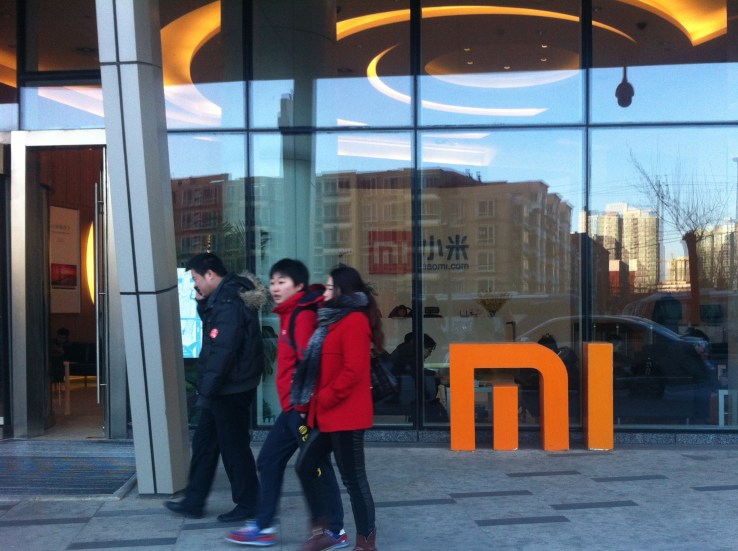
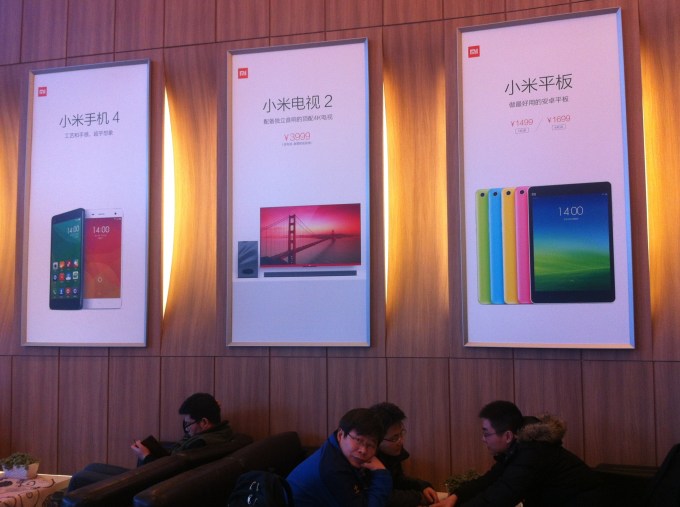
This Is How Xiaomi Keeps The Cost Of Its Smartphones So Low


Xiaomi’s combination of well-spec’ed phones and low price tags drove the company to over60 million sales last year. That progress saw it replace Samsung as China’s top-selling smartphone company and become the world’s third top selling phone maker in the process.
The Chinese company’s flagship Mi devices typically retail for around $300 — its new Mi Note Pro notably breaks the $500 barrier for the first time — while its affordable Redmi family is sub-$150. For comparison, Apple’s top of the range iPhones sell for over $1,000 off contract, while the Samsung Note and GalaxyS families are similarly priced. So how can Xiaomi be so aggressive with its pricing?
Many theories have been put forward, including claims that Xiaomi sells at cost and makes money from other services. Hugo Barra, the company’s VP of International, lifted the lid on some of the company’s secret sauce in an interview with TechCrunch in Beijing last week.
Xiaomi is able to make price concessions thanks to the combination of a small portfolio and longer average selling time per device
Barra explained that Xiaomi is able to make price concessions thanks to the combination of a small portfolio and longer average selling time per device.
Importantly, Xiaomi continues to sell older devices (and tweaked versions of them) at reduced prices even after it releases newer models.
“A product that stays on the shelf for 18-24 months — which is most of our products — goes through three or four price cuts. The Mi2 and Mi2s are essentially the same device, for example,” Barra explained. “The Mi2/Mi2s were on sale for 26 months. The Redmi 1 was first launched in September 2013, and we just announced the Redmi 2 this month, that’s 16 months later.”
That’s important because the longer runway for devices gives Xiaomi leverage to secure better component deals with its suppliers.
“The reason we do these price cuts is because we’ve managed to negotiate component cost decreases [with our suppliers] over time, which ends up leaving us with a bigger margin than we’d like to have, so we do a price cut,” Barra added.
“The vast majority of the components [in our devices] are still the same, so in terms of supply chain and component sourcing, we’re on the same supply contracts as Redmi 1, which means we’re still getting the same discounts on components,” he explained. “We can continue to ride the cost curve, so the importance of having a very small portfolio is significant — the fact that we only launch a few products each year, and (the fact that) we only have two product families.”
xiaomi

Barra said that the dynamics are “very simple,” but a commitment to devices for two or three years isn’t just about making price cuts. He pointed out that Xiaomi maintains software updates, spare parts and other services that customers require, longer than most companies would.
“The more focused the portfolio, the more efficient we can be at managing those costs too,” he explained.
There are other factors that contribute to the cost structure, including Xiaomi’s lean, online-only marketing focus and its location close to manufacturing plants in China , but the management of components and supply chain partnerships is a crucial element.
Xiaomi has big plans for expanding beyond Asia this year, which will make its pricing model and supply chain more important than ever.
The company sells its phone using an online-only model in most markets, but it has recently begun testing operator partnerships outside of China. It is running a limited trial with Airtel in India, and has found partners in Taiwan, Malaysia and Singapore.
Barra explained that operator partnerships are difficult in markets where the majority of consumers are on pre-paid tariffs — such as India — but it seems clear that Xiaomi is looking into ways to expand its retail footprint. It sold one million devices in its first five months in India using its flash sales model. If it can move beyond that and better meet demand for its phones in India and other emerging markets, it could vastly increase its sales figures in 2015.
Last year, Xiaomi projected that it would sell 100 million devices this year. It increased its target for 2014 mid-way through the year, but we’re yet to hear of a new figure for 2015 from the company.

Wednesday, 29 October 2014

Samsung Galaxy Note 4 review: The most powerful phablet yet


By Ravi Sharma

When Samsung launched its Galaxy Note phablet four years ago, everyone scoffed at two of its features, the screen size and the stylus. Of course, the series went on to become a hit, defined by the same screen size and stylus that naysayers were quick to put down.

Fast forward four years and for the first time we see that Samsung has not increased the screen size in the Note series (over the previous year). The Note 4 stylus too performs nearly all of the same functions as the one in its predecessor. In fact, there are only a few differences between the two phablets, but are they meaningful enough to warrant an upgrade? Should this phablet be your next buy at Rs 58,000? Find out in our Samsung Galaxy Note 4 review...

Display

The display has been the biggest selling point of Note phablets since the series' launch, and the situation is no different this time as well. Galaxy Note 4 has a 5.7-inch SuperAMOLED screen, the same as last year; however, Samsung has upped the screen resolution, from Full HD (1080x1920p) in Note 3 to 2K (1440x2560p) in Note 4. This increase in resolution leads to pixel density of over 500ppi; the pixels in this phablet are packed so closely together that it is nearly impossible for the naked eye to set them apart.

However, the pixel density is high enough in Note 3 as well (386ppi), as the human eye cannot differentiate individual pixels after approximately 330ppi. So, even the display of Samsung Galaxy Note 4 is gorgeous, it is pretty much similar to that of its predecessor's. Of course, a few display elements come to life on a 2K display, such as shadows in the Facebook app or markings in certain areas of games etc. But as we have said earlier in our Oppo Find 7 and LG G3 reviews, a 2K display is not necessary right now as the app developers are not making full use of having the extra pixels on the screen.

Moving past the screen resolution, you get a beautiful display that earns top marks on all counts. The Samsung Galaxy Note 4 screen has excellent viewing angles, such that you won't see a change in colours even at the steepest angles. The SuperAMOLED screen performs okay-ish under direct sunlight, and colours appear a little oversaturated sometimes.

Samsung has added a layer of toughened plastic on top of the screen to make it harder to crack when dropped; this is in addition to Gorilla Glass 3. The plastic layer is characterized by a slightly glossy look and a noticeable curvature rising from the sides.

Design

The display covers most of the front panel of Samsung Galaxy Note 4, and leaves room for pretty thin bezels, hardware and soft keys and a bunch of sensors. In terms of looks, there are only a few differences in the design of Note 4 compared to last year's Note 3. In fact, you would be forgiven to mistake Note 4 as Note 3 from a distance. But a closer inspection reveals that there are more than just a couple of changes that distinguish the design language between the two.

The biggest change is the introduction of metal. Galaxy Note 4 features a metallic rim on the sides, making it only the second Samsung smartphone to feature this look. The metallic edge has been given a white paintjob all around, which creates a kind of contrast; in our white review unit, you see the white coloured front/back, then metallic chamfered edge and then the white paint-clad rim. Whether this looks good is pretty subjective, as some in the office like this look while other found it rather unnecessary.

Below the display is hardware Home key, the Task Switcher and Back button. The volume key is on the left side; for right-handed people, reaching the volume becomes a chore while operating the phablet with one hand due to its size. Samsung has used the faux leather back panel design that was introduced with Note 3 in its successor. However, the texture is a little less apparent this time and the widely-panned stitching on the sides is gone.
In terms of size and weight, Samsung Galaxy Note 4 is only a hair bigger and heavier than its predecessor. The difference is nominal, so you won't actually feel any substantial change in dimensions and heft while operating the two. Note 4 is, however, a little smaller than iPhone 6 Plus but a lot bigger than LG G3.

Hardware

Galaxy Note 4 is a heavyweight player for Samsung and so gets the latest chipset available in the market today. It is powered by Qualcomm's quad-core Snapdragon 805 silicon, clocked at 2.7GHz; it is actually the only smartphone in the market to feature this processor. The inclusion of this processor in the India variant is actually quite significant, considering that Samsung has always launched an Exynos variant of its top devices in India, not the Qualcomm-powered iteration. This means that Samsung is betting on proliferation of 4G in coming time.

This processor is coupled with 3GB of RAM. Internal storage maxes out at 32GB, but you can add a microSD card (up to 128GB) to add more data. Samsung provides 50GB of free Dropbox storage for two years as well. A 16MP rear camera and 3.7MP front camera constitute the imaging module.

You get all the standard connectivity options: 2G, 3G, Wi-Fi, Bluetooth 4.1, NFC, Infrared and microUSB 2.0. The last one is actually a surprise since Note 3 has microUSB 3.0, which makes Note 4 inferior to its predecessor in this one aspect. The battery capacity of Note 4 is 3,220mAh, just 20mAh more than that of Note 3.

Like Samsung Galaxy S5 and Alpha, Note 4 also has a fingerprint sensor integrated in the Home button and a heart rate monitor on the back, beside the LED flash.

Software

This is where Samsung Galaxy Note 4 sets itself apart from the competition. Note 4 is a productivity device that has a lot of software optimized for just this purpose.

Samsung has tweaked the Android software heavily over the years, adding a number of features to the base OS. Many a times, the approach makes the phone feel cluttered and too confusing for most users; however, there has been a move towards making it a little easier for the consumer to use all the TouchWiz functions. If you are a Samsung user switching to Note 4, you will find the move easy; but if you are using a Samsung device for the first time, the software can be a little too much to handle.

Let's talk about the Note 4-exclusive features here. Last year's Note phablet could recognize contact info you jotted down on the screen; this year's model can recognize the data given on a visiting card and saves it directly in your address book. When we tried it out, this feature could recognize the name, email ID and phone number accurately, but for some reason would not copy the address correctly.

Then there's the feature that lets you copy various type of data, such as web pages and photos, by selecting certain portion of the screen using the S Pen stylus. This is neat function for those who regularly store troves of data for themselves or send it to others; for example, a travel enthusiast can simply copy the details of a tourist destination, pick up images from the web and mail it to anyone within a few seconds. This makes the S Pen another step closer to the mouse we have become used to on the computer.

Samsung's big-screen phones have been able to open two apps simultaneously for quite some time now. But with Note 4, you are not limited to keeping the just two apps open; with this device you can open multiple apps at the same time on the screen by resizing them. You can either open them in a smaller window like the Chrome browser given in the image below or keep them as a floating icon (see the small WhatsApp icon on the left side of the screenshot). You can switch an app from fullscreen view to a small-scale version by swiping from the top left or right corners of the screen.
These are the notable software added by Samsung that are actually useful in day-to-day operations of the phablet. Apart from these, Note 4 has all the software we have seen in previous Samsung devices, like S Health, fingerprint scanning, S Pen functions like S Note, Air Command, Action Memo etc.

Performance

With the best hardware in the market and software that pushes mobile multitasking to the maximum, you can expect tremendous performance from Note 4. The device is a powerhouse and easily the fastest we have seen till date; in fact, the difference between the Snapdragon 805-touting Note 4 and other Snapdragon 801 devices like Galaxy S5, HTC One (M8) etc is apparent to the trained eye.

With the super-fast 2.7GHz quad-core Snapdragon 805 processor and 3GB RAM, Note 4 has enough power to handle any task thrown its way. Whether it's the most demanding games or heavy-duty apps, Note 4 can do it all with aplomb. The amalgamation of the software and hardware sometimes feels clunky instead of cohesive, but the feature-set is strong enough to mask this for the regular user.

Battery life of the phone was a concern to us before starting this review; of course we understood that the phablet would easily last a day on one charge, but we wondered if the 3,220mAh battery would be able to deliver more running time than that due to the resource consuming 2K display. As it turns out, Samsung has tweaked the software to ensure that Note 4 lasts at least a day and a half with moderate-to-heavy usage and nearly two days with moderate usage on one charge.

Note 4 also has fast-charging capability, and Samsung claims that it can go from zero to 50% in half an hour. In our tests, the phablet only goes from naught to 40% in 30 minutes, failing to hit the 50% mark each time we tried it.

Multimedia has to one of the strong suites of the big-screen Note 4. Watching videos is an amazing experience on this phablet because of the deep colours and excellent viewing angles. However, the audio needs to improve; the rear-mounted speaker is loud, but it's not clear. There is distortion at high volumes and the quality is just not good for a device that is the most expensive mainstream Android phone. Sadly, while HTC and Motorola have switched to front speakers, Samsung is still stuck with speakers on the back that easily get muffled when the phone is laid on the back.

Camera

The camera of Note 4 is easily among the best we have seen in the past year. As has become customary, the resolution has been increased from 13MP to 16MP, and Note 4 this time has optical imaging stabilization after missing out on the feature last year. Latching on the selfie craze is the 3.7MP front camera.

The rear camera of Note 4 takes photos that capture most of the details of the surroundings. The camera is quick to focus on the subject so that you don't lose shots while making home videos. The white balance in the photos is pretty accurate and shadows don't appear too grainy. OIS makes sure the photos and videos are blur-free even when you move. Lowlight image are actually better than we have seen on most phones.

The selfie camera is pretty feature-laden. You can take widescreen selfies by turning on the panorama-like feature that captures more area by turning the lens sideways. The heart rate sensor on the back can be used as a hardware button to click selfies on this phone. Just put your finger on the sensor and it the screen will show a green circle around your face; remove the finger from the sensor to take the selfie. In terms of photo quality, the selfies taken from this phone are pretty good even under low light, as the noise levels are rather low compared to those on other phones.

Verdict

Samsung Galaxy Note 4 is a powerful, powerful phablet that does not falter on any count. Sure, there is room for the software and hardware to work a bit more smoothly, but most users would find that the features are more than sufficient for their requirements. The price tag of Rs 58,300 is pretty high for any gadget, but if you do want the best smartphone (with all the possible bells and whistles) in the business right now, then Galaxy Note 4 is the best choice you can make.
The other new phablet in the market is iPhone 6 Plus, Apple's first big-screen device. Stay tuned for our detailed comparison between Samsung Galaxy Note 4 and Apple iPhone 6 Plus.


Wednesday, 15 October 2014

Xiaomi, Not Apple, Is Changing the Smartphone Industry


20141015_2

By Juan Pablo Vazquez Sampere 
Determining which customer to target first is one of the most critical decisions in the entrepreneurial process.  Customers that are relatively less risky and more predictable can make it easier for new to firms gain a market foothold. One such set of customers is the nascent middle class in emerging economies.
Why? First, as their financial situation improves they are anxious to buy new things. Not quite able to afford the top brands, they’re nevertheless willing to pay a little more for something they perceive might be close. Second, because they can’t yet afford the high-margin top brands, they’re not all that attractive to incumbents worried about generating enough cash to cover their high fixed and variable costs. So they exist in a sweet spot from an entrepreneur’s point of view: rich and numerous enough to fuel a start-up’s growth and also poor enough not to spur incumbents to respond.
Xiaomi, the four-year-old Chinese smartphone manufacturer, has found just such a sweet spot, and as a result is taking the smartphone industry by a storm. Pundits claim that Xiaomi is just a Chinese copycat of Apple, and not without some reason. Some point to Xiaomi’s product introductions, which are eerily just like Apple’s.  Others point out the strong similarities between Xiaomi’s operating system (named MIUI) and Apple’s iOS. What’s more, Xiaomi’s products rank among the best in the industry in terms of performance. All these cues might lead us to believe that it is competing head to head with the leading smartphone manufacturers.
However, looking at the full extent of Xiaomi’s business model reveals just how different – and how disruptive — it is. For starters, unlike Apple, Xiaomi is not targeting premium customers; it’s mostly teens buying those high-quality phones, and hardly at a premium, since Xiaomi’s prices are at least 60% lower. A neat trick. How does Xiaomi pull that off?
To sell high-quality cell phones at so low a price, Xiaomi keeps each model on the market far longer than Apple does. On average, a new version of a phone is launched every 265 days in the industry – down from 345 days in 2009. But Xiaomi doesn’t renew its product for two years. Then, rather than charge high prices to cover the high cost of state-of-the-art components, Xiaomi prices the phone just a little higher than the total cost of all its components. As component costs drop over the two-year period by more than 90%, Xiaomi maintains its original price, and pockets the difference. So essentially its profit formula is the opposite of Apple’s, which collects its highest profits with the introduction of each model and needs to come up with new model after new model to keep those margins up.
When you consider how much easier it might be to profit from plummeting component prices than from continual new feature development (which sooner or later will likely overshoot the needs of most cell phone customers in any event), the disruptive potential of the model becomes clear.
One might worry that other low-end competitors could easily copy this clever model, and to forestall that, Xiaomi has devised a creative way to create some of the mystique Apple is so justly noted for. Essentially it markets its phones to its price-constrained but status-conscious teen base in much the same way that rock band promoters sell concert tickets. Through an online retailer called Flipkart, potential buyers preregister for a short sales window. They’re required to stay online for at least two hours before the sale starts, and then only the first 20,000 lucky buyers get the opportunity to purchase. Human nature being what it is, after this awful experience, buyers end up wanting the phone even more.
Xiaomi is close to meeting its target of selling 60 million phones in 2014 with a business model well suited to expansion into other developing economies. In a classical reaction to disruptive innovation, the largest smartphone manufacturers were at first not motivated to seriously challenge Xiaomi, since they could not be profitable at the price these customers are able to pay. Now that Xiaomi is becoming a significant competitor, the incumbents are still barely reacting, launching simplified versions of their mature flagship products, as Apple did with the iPhone 5c. But these are perceived as outdated, as newer models, like the iPhone 6, are introduced amid great fanfare in wealthier markets, and often end up being discontinued.
So far from being a copycat, Xiaomi presents a knotty disruptive challenge to the largest smartphone manufacturers. As it continues to expand in developing economies by marketing to the emerging middle class, it remains sheltered from the competition by its margins and the way it makes products profitable. Sooner rather than later, as it continues to propagate its new business model, this disruptive competitor is going to change how this industry works.

HTC Desire Eye vs. LG G3 – Specifications, Features And Price Comparison


New HTC Desire Eye (aka HTC's selfie phone) has recently been introduced in a special HTC event and the release date is expected to be in November. The LG G3, on the other hand, was released in June. Readers who are interested in purchasing the LG G3 or the HTC Desire Eye should check out this comparison.
(Photo: REUTERS / Han Jong-chan/Yonhap)

Display, Exterior And Size
The HTC Desire Eye comes with a 5.2-inch LCD display complemented by 1,080 x 1,920 pixels screen resolution, while the LG G3 features a relatively bigger 5.5-inch True HD-IPS + LCD display and 1,440 x 2,560 pixels resolution. While the LG device comes with a pixel density of 534 ppi, the HTC handset clocks 424 ppi.
When it comes to design, the Desire Eye smartphone features high quality plastic exterior when compared to the flagship HTC One (M8). The company has put in efforts to improve the front and rear cameras and in the process, the Duo Camera feature seen in the One M8 is removed. Furthermore, the device comes with a physical camera shutter button. In general, the Desire Eye is a worthy enhancement of the HTC One M8, reports ZDNet. Meanwhile, the LG G3 comes with a plastic exterior, however the metallic-effect on the plastic body is convincing enough and it offers the much-loved premium look to the device. The highlight of the G3 is its killer display. The sheer size and sky high-resolution take the viewing experience to another level. Plus, the rear panel is removable, according to Tech Radar.
Speaking of size, the thickness and weight of the HTC smartphone are 0.33-inch and 154 g respectively, while the LG G3 is 0.35-inch thick and weighs 149 g. Hence, the LG handset is lighter but the HTC device is thinner.
Hardware, Software And Memory
Both the smartphones are powered by the same quad-core (Qualcomm Snapdragon 801) Krait 400 processor. Nevertheless, the processors of the LG and HTC handsets are clocked at 2.5 GHz and 2.3 GHz, respectively.  While the G3 is backed by a solid 2 or 3 GB of RAM choices, the Desire Eye settles for 2 GB.
Moreover, the LG G3 runs oikn Android 4.4.2 KitKat OS, whereas the Desire Eye runs on the same Android version as the G3 with HTC Sense 6 UI on top of it. When it comes to memory, the LG handset provides 16 GB and 32 GB of internal storage options, whereas the HTC handset comes equipped with 16 GB storage. Readers should note that, the G3's 16 GB model comes with 2 GB of RAM, whereas the 32 GB variant comes packed with 3 GB. Plus, both the devices support expandable storage up to 128 GB.
Camera And Battery
Quite interestingly, both the handsets sport the same 13 MP primary camera unit with dual-LED (dual tone) flash. Additionally, the HTC smartphone houses a killer 13 MP front-facing camera unit, staying true to the name selfie smartphone. The unique feature, however, is the frontal flash i.e. dual-LED (dual tone) on the Desire Eye handset to capture impressive selfies.
Moreover, HTC's front and back snapper units can capture 1080p videos. Plus, there is a Split Capture feature that can split the captured image into 50:50 by combining the images shot from the front as well from the rear cameras. In addition, there is a Crop-Me-In option that can be used to embed the user's image into any other form of image, similar to photo-shopping the picture. Other significant camera-centric apps housed in the device include HTC Eye Experience and HTC Zoe, according to GSM Arena.
Moving to LG G3's camera features, the handset comes with optical image stabilization (OIS), simultaneous video and image recording and 4K video recording options. Moreover, the G3 is well-known for its impressive camera software features. The unique features include "Laser Autofocus Sensor" and "Selfie Mode," to name a few. According to LG, the laser autofocus sensor is very fast that it demands only 0.276 seconds to focus an object/person. Plus, the G3 camera supports voice activation. Moving to battery configuration, the LG handset houses a good Li-Ion 3000 mAh unit, whereas the HTC device settles for a relatively inferior Li-Ion 2400 mAh battery unit.
Additional Features
1. The LG G3 comes equipped with wireless charging capability, while the Desire Eye doesn't. The HTC Desire Eye, meanwhile, features the well-received HTC BoomSoundspeakers. Moreover, the Desire Eye comes with water- and dust-resistant exterior (IPX7 certified), whereas the LG G3 doesn't.
2. The HTC handset comes with a microphone housed near the selfie camera. In addition to the frontal microphone there is one at the rear and another one on the bottom of the smartphone. This translates to a total of three microphones to provide quality audio reception alongside the noise cancellation feature, reports GSM Arena.
3. While the LG device employs micro-SIM, the HTC smartphone supports nano-SIM. In addition to the standard connectivity options, both the handsets support 4G LTE and NFC. Furthermore, the LG handset supports Infrared port, while the Desire Eye doesn't.
4. HTC's Zoe app offers collaborative video editing feature on the Desire Eye. In addition, Zoe can pair with RE, the brand new stand-alone, action camera from HTC. The good news is that, global Android users will also to get to benefit from Zoe, because this app is not exclusive to HTC smartphones. The company will roll out Zoe to all Android users in future. Adding cherry on top, Zoe's Apple iOS app will be released sometime towards the end of 2014.
5. Additionally, the HTC Eye Experience camera app is not exclusive to Desire Eye. HTC will introduce the app to One (M8), One (E8), One (M7), One Mini, One Mini 2, One Max, One Remix, Desire 612 and Desire 816 shortly.
Price
The LG G3 (16 GB, 4G LTE) model can be purchased for AU$539.95 in Australia. Readers should note that, the price of the LG handset has come down tremendously from the time the device was released. The HTC Desire Eye, meanwhile, will be an AT&T-exclusive device upon release. The handset is priced at €529 in France that roughly translates to US$670 and AU$767, reports NWE.

Huawei Honor 6 Extreme Edition is official with Kirin 928 chip


At an event today in Beijing, Huawei officially unveiled the Honor 6 Extreme Edition packing the company's latest Kirin 928 chipset. Its comprised of an 2GHz octa-core CPU, 3GB of RAM and Mali T628MP4 GPU. We're yet to see how much faster the Kirin 928 is compared to the Kirin 920 found in the Honor 6.
Visually, the phone retains the exterior of its predecessor and keeps the 5" 1080p display. The phone runs the latest Android 4.4 KitKat out of the box and offers LTE-A Cat.6 for the networks that support it.
Internal storage is 32GB and is expandable via the microSD card slot (up to 128GB). At the back, there's a 13MP snapper teamed up with a 5MP front-facing shooter. Under the non-removable back cover sits the same 3,100mAh battery as on the original Honor 6.
The company is also launching a bunch of accessories for the Honor 6 Extreme Edition. Expect specially designed headphones, a 0.2mm tempered glass screen protector, 2 NFC tags and a limited edition "Road and force" protective shell.
Huawei will only make 9,999 units of the Honor 6 Extreme Edition and will retail for $489 (RYB 2,999). Pre-orders start on October 21.


Tuesday, 14 October 2014

The Apple Watch's Achilles Heel is the iPhone

By: Chunka Mui

Now that the dust has settled on the long-anticipated unveiling of the Apple Watch, a major obstacle to its success is coming into view: the iPhone.

The Apple Watch has been the subject of breathless anticipation for years because, as Tim Cook said at its introduction, it represents “the next chapter in Apple’s story.” Conceived three years ago, shortly after Steve Jobs’ passing, the Watch is the embodiment of multiple dramatic arcs and aspirations.
It is the first major new product developed under Tim Cook and Jony Ive outside of Jobs’ shadow—and thus has huge personal and legacy implications for both men.
The Watch is also Apple’s attempt to catalyze and dominate the wearables category. Given the intense competition in the smartphone market and the widespread view that new killer products, platforms and ecosystems will emerge somewhere at the intersection of the Internet of Things and wearable computing, the Watch is central to Apple’s post-iPhone strategy.
It might seem that the iPhone should be the Apple Watch’s greatest asset. Apple is positioning the Watch as a jaw dropping, must-have peripheral to the iPhone. Millions of iPhone-toting Apple fans are sure to queue up upon the Watch’s 2015 launch to buy it. But, do not mistake early adopters for market validation. For billions of other potential customers, the Watch’s close linkage and tethering to the iPhone could be a fundamental weakness.
In the short term, Apple must convince existing customers that they need a Watch in addition to their iPhone. Apple, however, has yet to offer a convincing case for this.
Long rumored groundbreaking health apps built on Watch-mounted sensors have not materialized—disappointing many healthcare watchers (including me). That leaves Apple competing against more narrowly focused wearable devices like the Fitbit and Pebble—but at multiple times the price and fractions of the battery life.
Apple is also touting Apple Pay as a killer app that will attract consumers to the Watch. But, while Apple Pay is an intriguing service-oriented strategy for Apple, there is no need for consumers to buy an Apple Watch to use it. Apple Pay will work fine with just the iPhone.
For now, it seems that Apple has higher hopes for the Watch as a fashion accessory than as a category-defining killer app. But, even that highbrow aspiration has ample skeptics who question the Watch’s fashion chops andbusiness potential.
In the long term, when and if compelling apps emerge for the Watch, Apple will have to convince Watch enthusiasts that they need an iPhone in addition to the Watch.
This might not seem like a limiting factor given that there are more than 300 million active iPhone users. But, imagine if the iPhone were just a peripheral to the Mac, thereby limiting its addressable market to Mac owners. Or, imagine if the iPhone had to be tethered to the iPod. Do not such scenarios, in retrospect, sound implausibly shortsighted?
Both the Mac and the iPod were great products with loyal followings at the iPhone’s introduction. Apple, however, did not limit the iPhone to its predecessors’ market niches. As shown in Figure 1, the result was a blockbuster that lifted Apple far beyond those earlier products. The iPhone has grown to represent more than half of Apple’s revenues and perhaps even more of its profits.
Figure 1 — Apple Device Sales
Now the iPhone has a loyal following but a small share of the smartphone market. Will Tim Cook limit the Apple Watch’s success to iPhone owners, or will Cook free it to dominate the potentially larger wearable devices space?
Freeing the Watch is a strategic imperative.
History tells us that market leading technology products like the iPhone inevitably fade. The companies that depend on them must innovate into the succeeding categories or fade as well. Kodak, Polaroid, IBM, DEC, Nokia, Motorola, Blackberry, Intel, Sony, Dell and Microsoft are among those fading or faded companies.


All of those other companies underutilized disruptive advances in information technology for (at best) incremental enhancements to their dominant products. By doing so, they missed out on new killer products, business models and industries that coalesced around the new platforms enabled by those technology advances.

Thus, Kodak wasted decades trying to deploy digital photography (which it invented) as an enhancer to its dominant film-driven businesses. Microsoft was slow to the web and the cloud and killed its early e-reader and tablet devices because of internecine struggles over how those new categories related to its Windows and Office businesses. The list goes on: IBM did not lead in minicomputers. DEC and every other leading minicomputer maker missed out on personal computers. Motorola and Nokia were killed by smartphones, and Blackberry is near death.
Limiting the Watch to a peripheral role in the iPhone-centric ecosystem would repeat the same mistake made by those earlier market leading technology companies.

That’s not to say there is not a lot of money to be made in the defend-the-cash-cow approach. Just look at the more than $650B in revenue and nearly $250B in earnings that Steve Ballmer delivered in his tenure as Microsoft CEO. Ballmer achieved those impressive numbers by defending and milking Microsoft’s dominant Office and Windows products. Ballmer, Microsoft and its investors missed out, however, on the market value created by Google, Apple, Facebook, Twitter and others who capitalized on search, big data, cloud computing, mobile devices and social media. Ballmer’s inability to grow beyond the core products that he inherited stagnated Microsoft’s market value for a decade.
Likewise, Tim Cook could nurse Apple’s iPhone-driven revenue stream for a long time. I doubt, however, that Tim Cook would be satisfied with a value-creation legacy comparable to Steve Ballmer’s.
It is too early to dismiss the Apple Watch’s potential to transcend the iPhone.
We’ll get a measure of Apple’s foresight when it releases the software development kit (SDK) for the Watch. That will show how fundamentally tethered the Watch is to the iPhone and whether Apple has laid the groundwork for the Watch to be standalone at some point.
The real gut check for Tim Cook is further out in time, when technology and creativity enables wearable devices like the Watch to not only stand alone from the iPhone but also to replace it.
Will Tim Cook allow the Watch to cannibalize iPhone sales—as Apple previously allowed the iPhone to eat away at the iPod and risked the iPad doing the same to the Mac? Or, will Apple stagnate as competitors and new entrants out-innovate it? Will Apple fade away as the riches from new killer apps, devices, ecosystems and business models that coalesce around emerging wearables-centric platforms flow to others?