Showing posts with label Motorola Moto X. Show all posts

Monday, 13 October 2014

LG G3 vs. iPhone 6 Plus specs: Same screen size, a whole lot of different features

 By: 

After the launching of the iPhone 6 Plus, it has often been compared with one of LG's latest offerings, the G3. Although both devices have 5.5-inch screens, they may have more differences than similarities.
[Photo credit: Facebook]
LG G3
Looking into more details, LG's flagship boasts a resolution of 2560 x 1440 pixels that provides a highly rich experience for users, whereas Apple's offering provides 1344 x 750 resolution, significantly lower than that of the G3.  Nonetheless, with 16:9 aspect ratio, such device still offers clear and detailed images and videos.
In terms of storage and memory, the LG G3 is available only in a 16 GB or 32 GB version, but can be expanded as it supports microSD cards of up to 128 GB.
On the other hand, the iPhone Plus does not come with a microSD slot but offers 16 GB, 64 GB and 128 GB models. The device also provides a cloud storage option and a greater capacity for internal storage options.  Users can utilize 5 GB of cloud storage, free of charge, along with the Photo Stream for one's pictures.
The LG G3 comes with a 13-megapixel camera, whereas the iPhone 6 Plus features an 8-megapixel camera that is similar to a previous model, the iPhone 5S. As such, the G3 is expected to snap photos and capture clips that are of higher quality.  It also allows users to shoot 4K videos, which the iPhone is not capable of doing. Nonetheless, the iPhone 6 Plus comes with faster auto-focus and wide angle lens.
[Photo credit: Apple]
iPhone 6 Plus
A Snapdragon 801 chip set that comes with a 2.5 Ghz quad-core processor has been incorporated into the LG G3, which runs on the Android 4.4.2 KitKat operating system.  With the special Andreno 330 GPU, such device has been praised for the graphics it generates, which are comparable to those of game consoles.
Meanwhile, the iPhone 6 Plus makes use of the new A8 chip set that enables Apple's offering to carry out desktop-level performance.
Other features for the LG G3 include protective recommendations from Smart Notice, new ways of unlocking the phone through the KNOCK Code, and wireless charging, among others.
The iPhone 6 Plus, on the other hand, features a new mobile payment platform, thanks to near field communication (NFC); the phone also comes with a larger battery (2915 mAh), supports third-party keyboards, and features optical image stabilization for enhanced photo capture.

Saturday, 11 October 2014

Acer Iconia Tab 8 Review: A Lot Of Tablet For Not A Lot Of Money

By: Cameron Summerson
Three years ago (or thereabouts), if you would've asked me about Acer tablets, my response would likely have been something similar to DeAndre Jordan's face after this nasty dunk over Brandon Knight back in 2013. Or, to put it a little more bluntly, there probably wouldn't have been anything positive to say. At all.
The company has come a long way since then, and I feel like it has been offering especially good value for the money as of late, and the Iconia Tab 8 may be the crown jewel of its collection. The weakest link in most of its predecessors was the display, which Acer has (finally) corrected on this go. Pair that with solid performance and a $200 price tag, and you have a winning tablet.
wm_IMG_3730

Specs

  • Display: 8-inch 1920x1200 display
  • Processor: 1.3GHz quad-core Intel Atom z3745, 64-bit
  • RAM: 2GB
  • Storage: 16GB, microSD card slot
  • Cameras: 4MP rear shooter, 2MP front
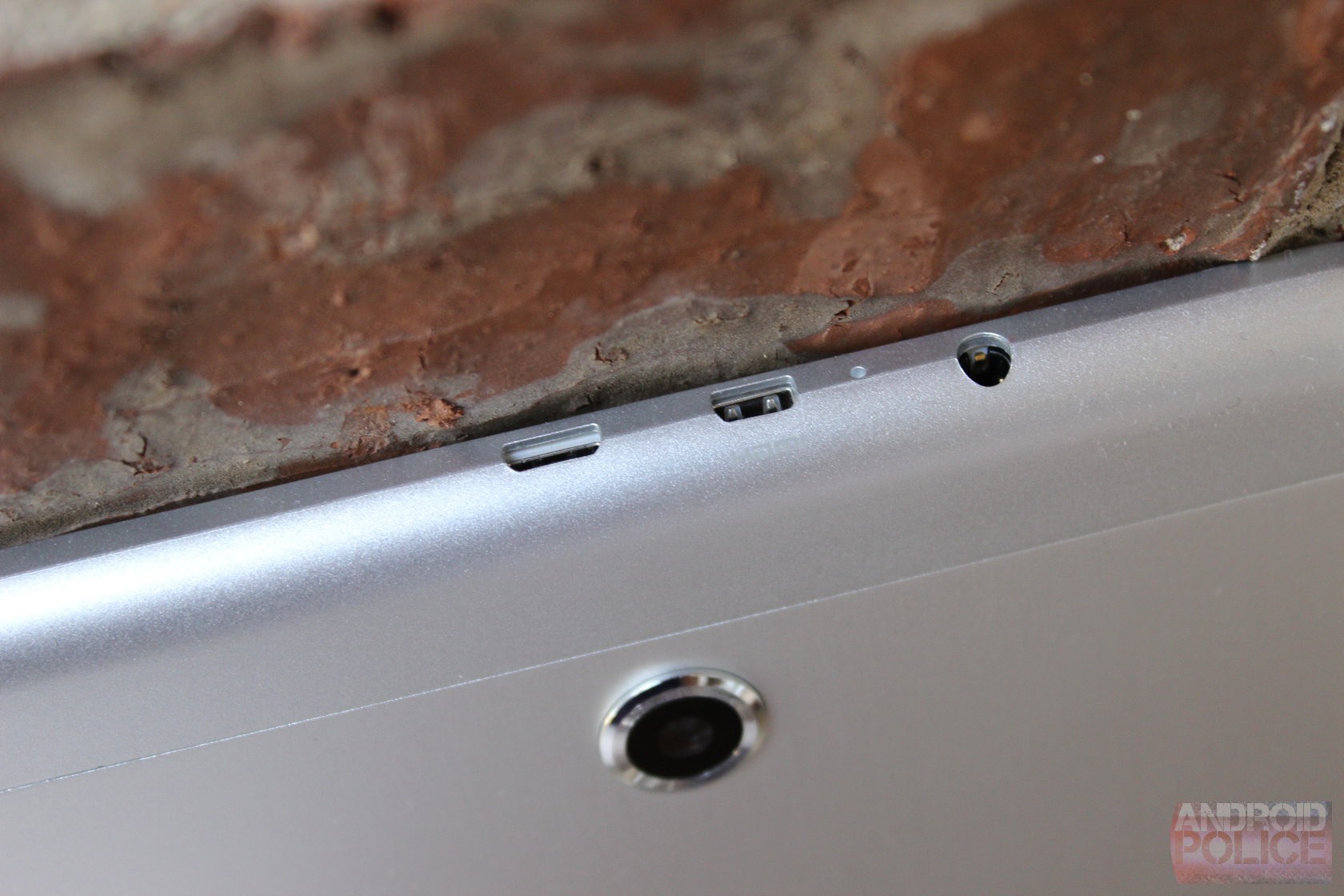
  • Ports: microUSB, microSD, microHDMI, headphone jack
  • Wireless: 802.11 b/g/n, Bluetooth 3.0
  • Battery: 4,600 mAh
  • OS: Android 4.4.2
  • Dimensions: 8.46 x 5.12 x 0.33 inches; 12.6 oz.
  • Price: $199
  • Buy: Amazon
Pros
Cons
  • Solid device for the price
  • Good form factor
  • Best display I've ever seen on an Acer device
  • A few interesting and unique software features (without being overbearing)
  • The cameras are wretched
  • Probably won't ever see any OS updates

Hardware and Build Quality

When it comes to Acer tablets, I've grown to have certain expectations. I never plan on being wowedby what I'll see, but I also don't expect to hate it, either. I'm basically always looking to see a middle-of-the-road device at a decent price point. And that's exactly what the Iconia Tab 8 is, though it easily stands out in Acer's current catalog. The build quality is good, and the hardware is on point without being amazing. It's a solid all-around little unit.
wm_IMG_3735
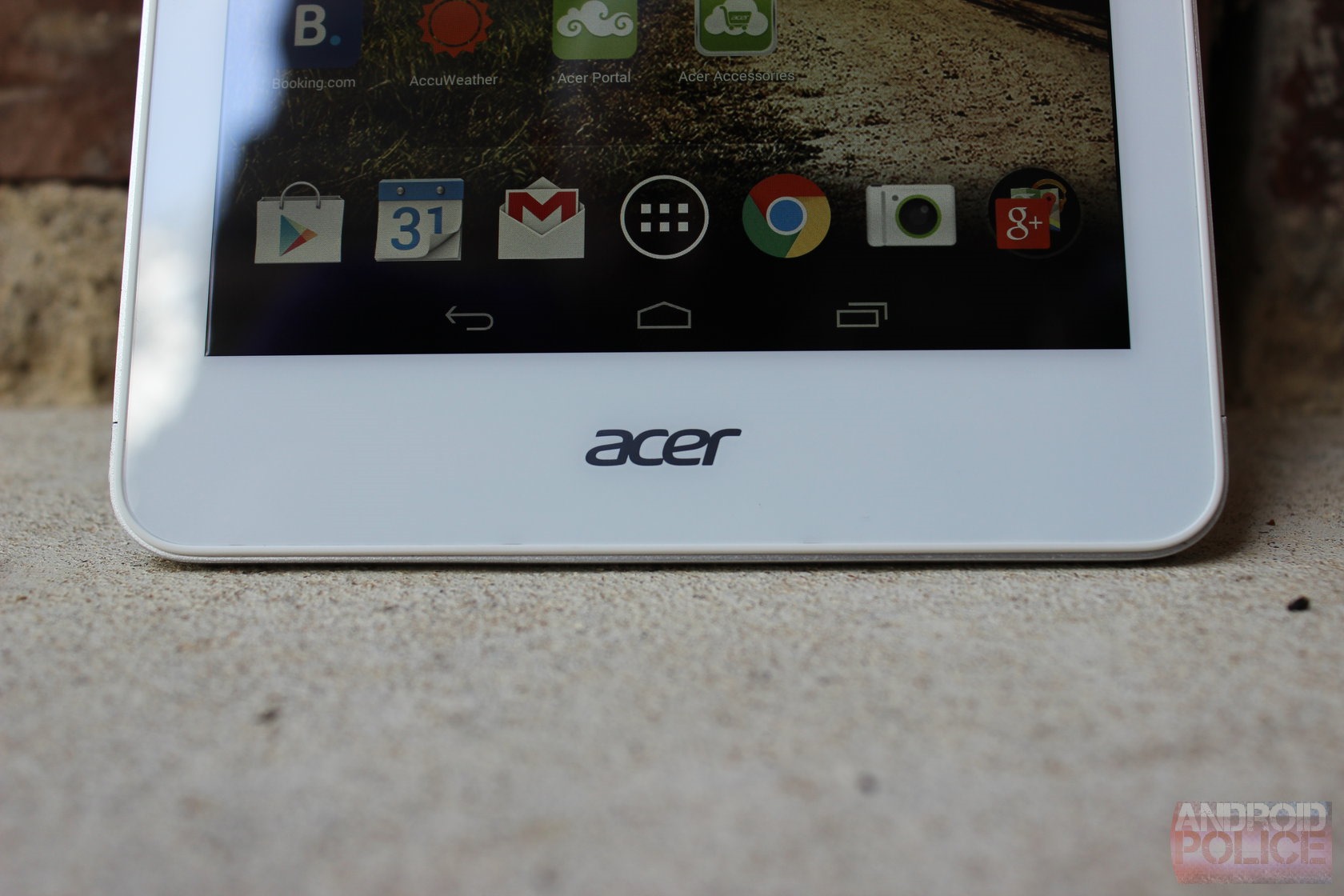
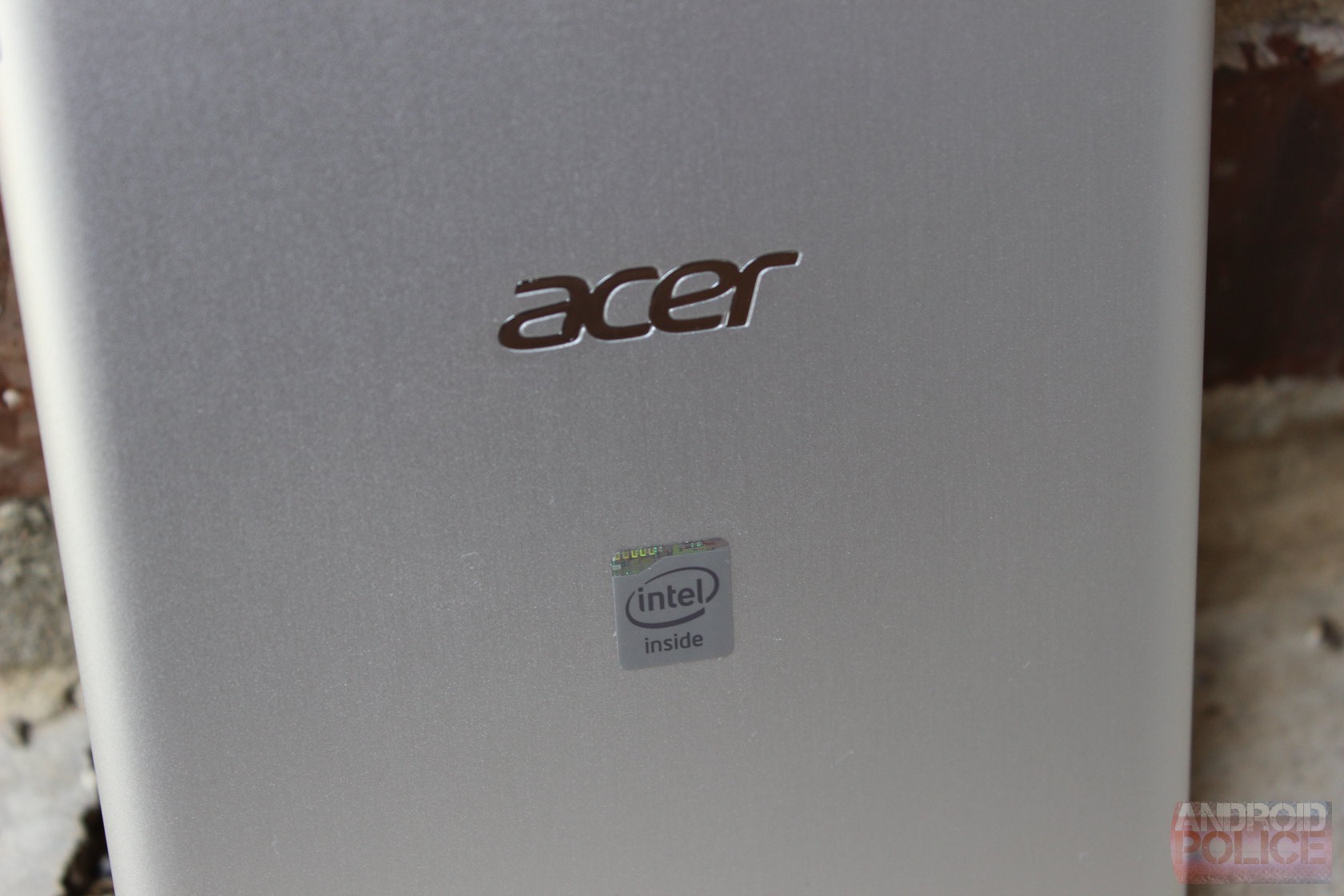
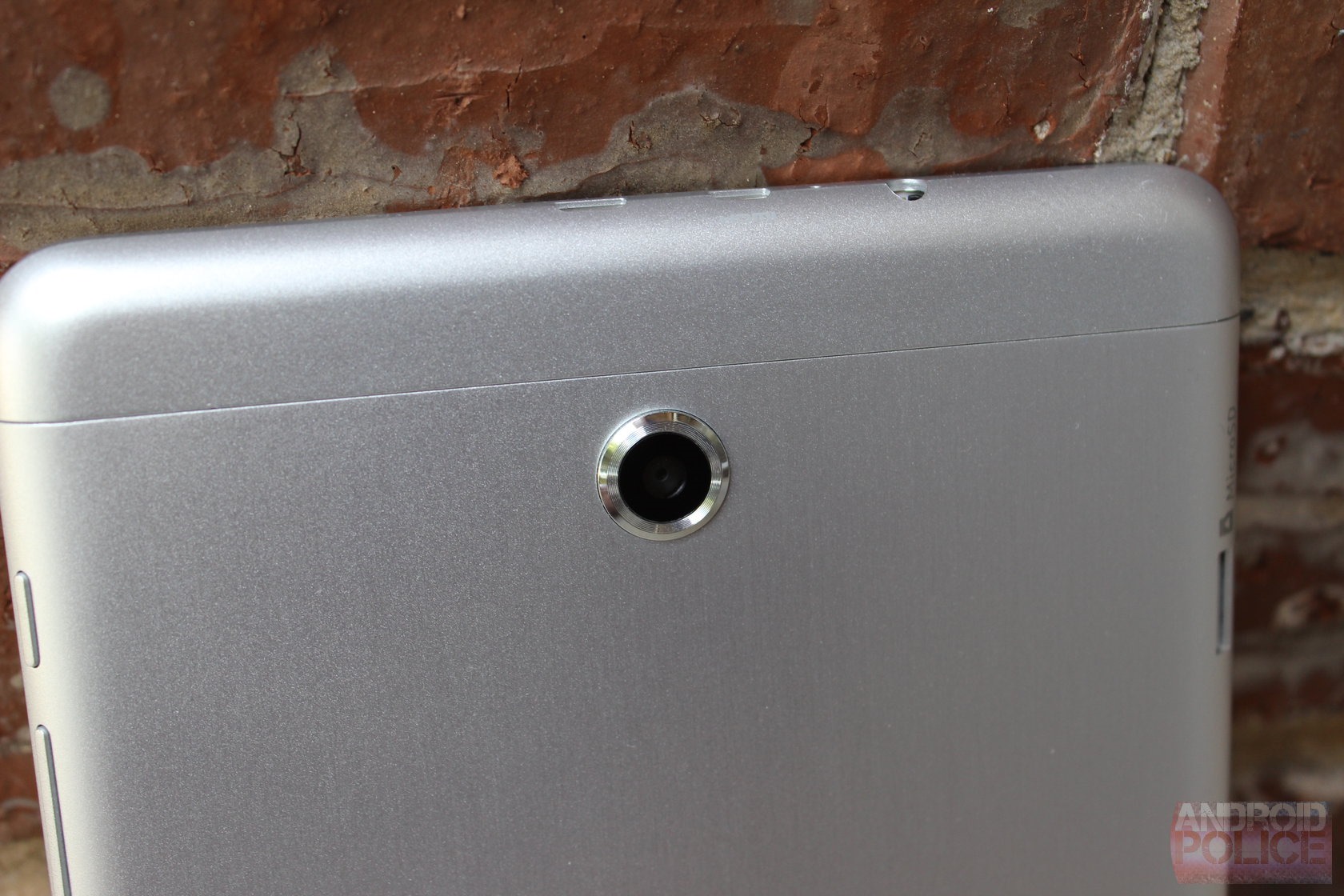
The front of the device is clean and white, with a simple Acer logo at the bottom and camera at the top. As with other Acer tablets, you won't find physical buttons here - everything is on screen. The back of the device is aluminum, which I personally don't like. Those who find aluminum's cold exterior pleasing to touch, however, will likely enjoy what Acer has done here. From what I can tell, only the larger, center section of the back is metal, whereas the small(ish) top and bottom caps are actually plastic. They blend in well enough, but there's still a distinct separation between the pieces, which takes away from what could potentially be an otherwise sleek exterior.
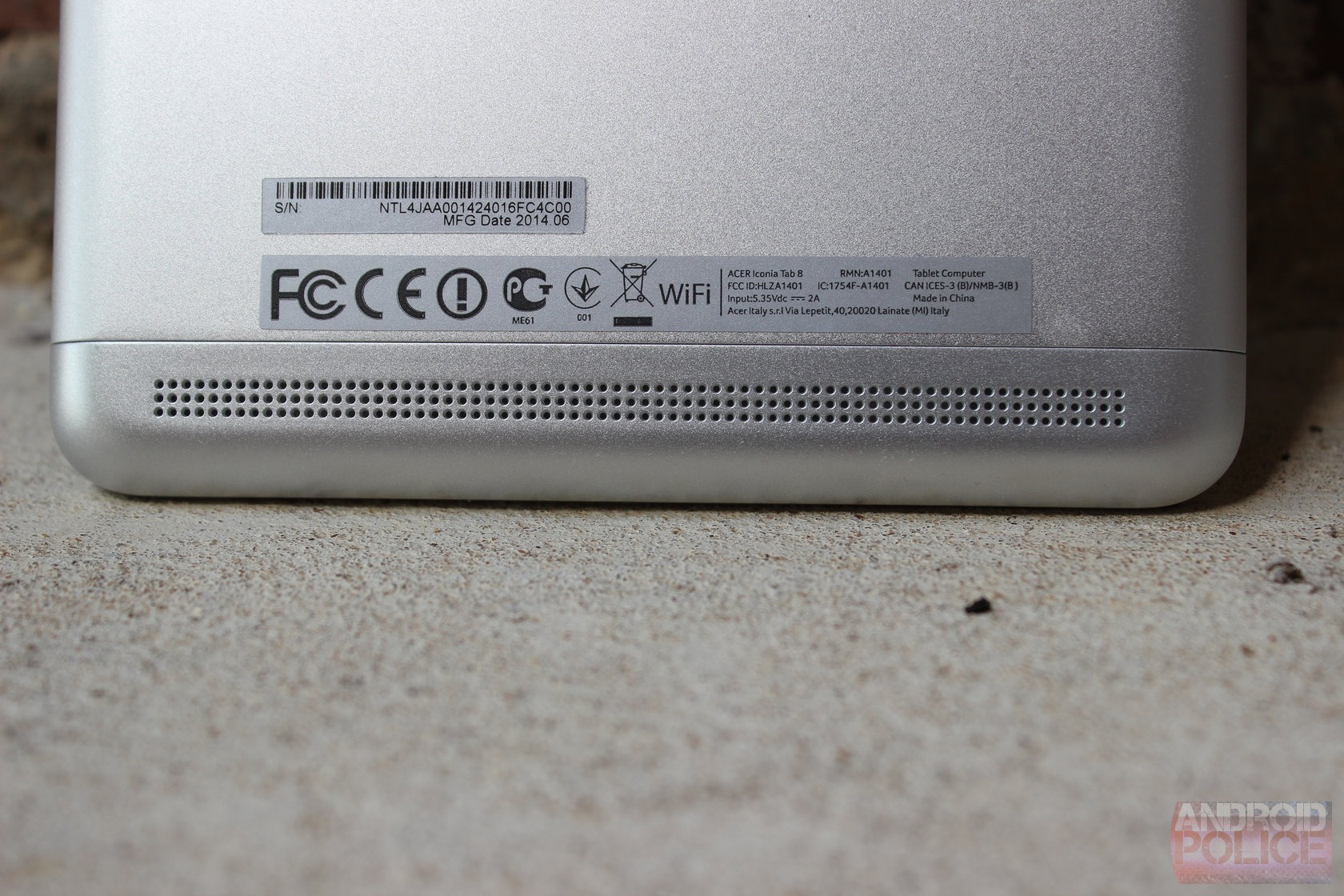
wm_IMG_3741 wm_IMG_3743 wm_IMG_3747
The best feature of the IT8, however, is its display. For far too long Acer has cut corners when it comes to screens, but I'm happy to say that it decided to go with a much nicer panel on this tablet. The 1920x1080 screen looks quite good – colors are well balanced and viewing angles are excellent. It's definitely a breath of fresh air to see a display of this quality on an Acer device.
Otherwise, the IT8 delivers on most other things users will be looking for in this price point, save for the cameras, which are pretty awful. Outside of that, everything else is solid.
wm_IMG_3736 wm_IMG_3738 wm_IMG_3749

Software and Performance

For the most part, Acer left stock Android untouched. It did, however, throw a few little tweaks in here and there, most of which I actually find kind of neat. Let's talk about those first.
For starters, it's got an LG KnockON-esque feature called Touch WakeApp. When enabled, this essentially allows the tablet to be turned on with a five-finger tap or two-thumb gesture (the latter of which only works in portrait mode) instead of using the traditional lockscreen. While it may not be the most powerful (or useful) utility, it's still kind of cool.
Screenshot_2014-10-10-12-22-23 Screenshot_2014-10-10-12-22-31 Screenshot_2014-10-10-12-22-57
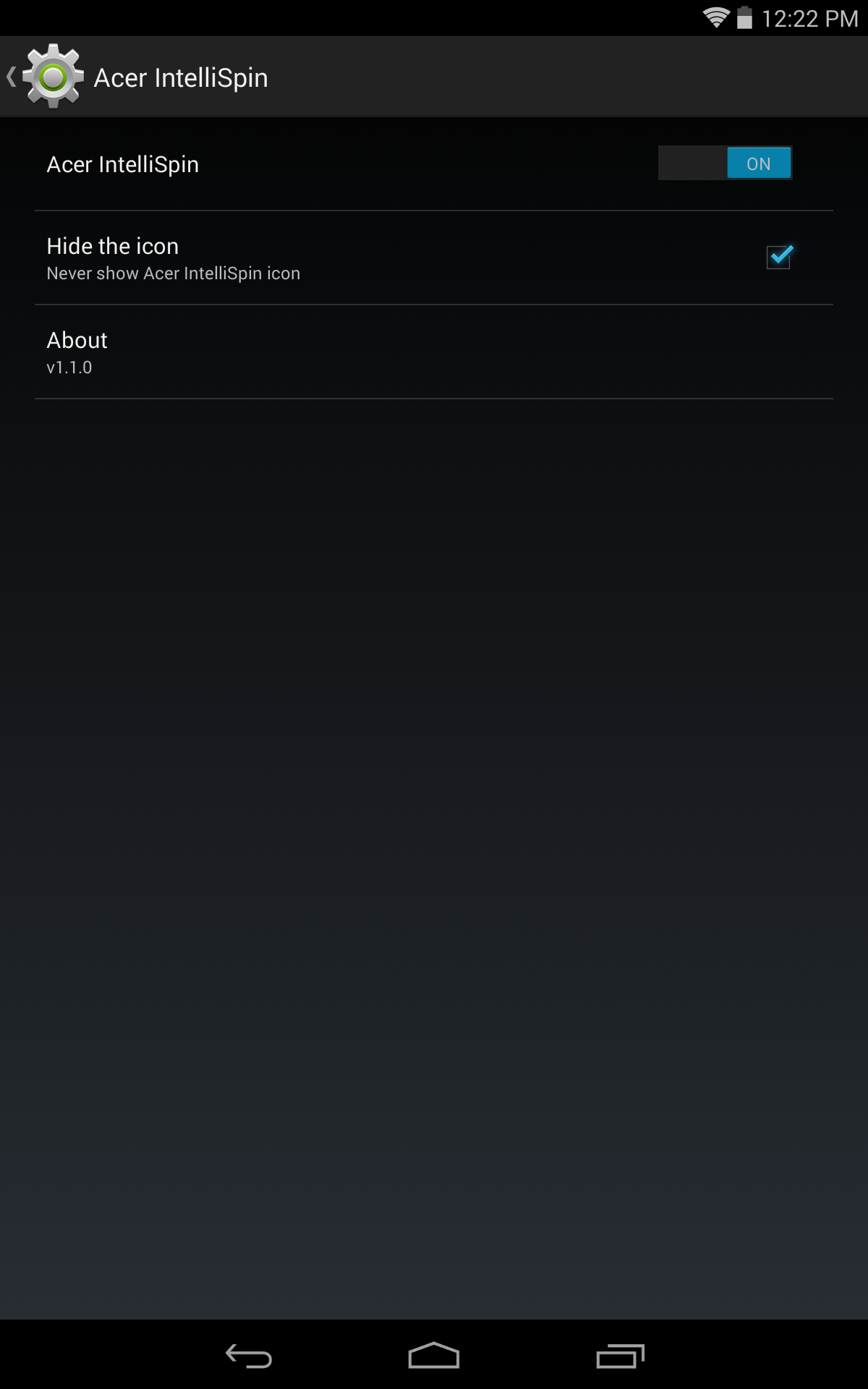
Past that, it also has a really cool feature called IntelliSpin, which allows the tablet to detect rotation even when it's lying flat. For example, if you put it on the tablet in portrait and then want to watch a video, simply spinning the tablet around will readjust the orientation as well. It's a simple fix to an annoying problem. Also, like all other Acer tablets, the volume rocker adjusts according to the orientation (which is something I can't believe stock Android doesn't do on its own).
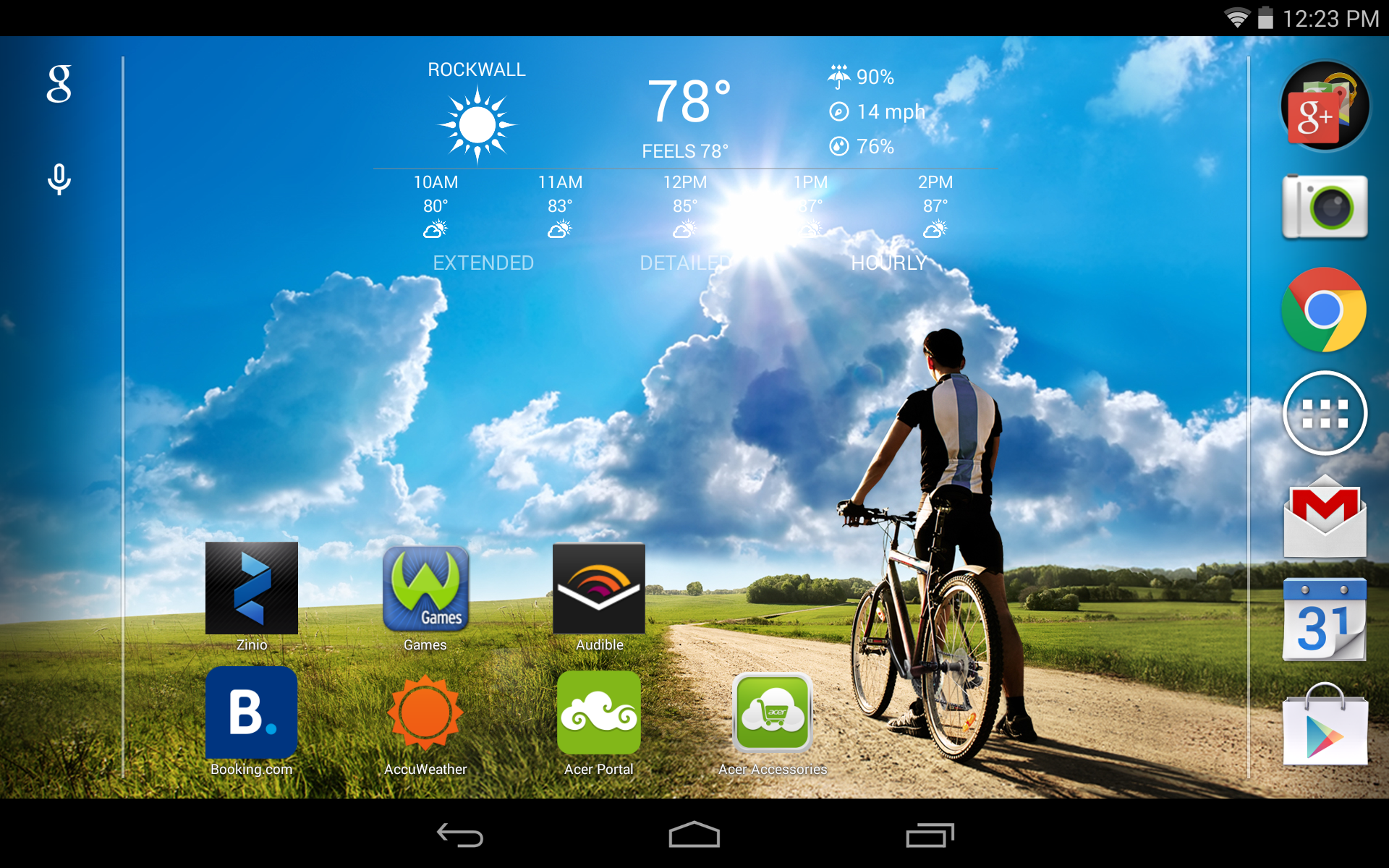
Otherwise, it's a pretty barebones Android system. Acer swapped out a few of the icons for its own take on how they should look, added a bit of color here and there, but pretty much left stuff alone.
On the hardware side, the Iconia Tab 8 isn't what I'd call a powerhouse - but don't call it a creampuff, either. It's a solid performing device, and the quad-core Intel chip left me pretty impressed overall. At no point during my time with IT8 did it lag or slow, and for the most part, it kept up fine with all the things I normally use a tablet for. I was surprised by the Intel processor – it handled everything I threw at it without so much as a hiccup. It purred along nicely, launching apps and loading pages at a very consistent and non-frustrating pace. I wouldn't say it's the best for heavy gaming, but it handles lightweight games without issue. For gamers looking to pick up a tablet, I'd still recommend SHIELD Tablet, of course.

Conclusion

Screenshot (12_23PM, Oct 10, 2014)
At the end of it all, I'd say the Iconia Tab 8 is the best Acer tablet I've used to date. The build quality is good (albeit understated), the performance is incredibly smooth and consistent, and the display is very good. Pair that with Acer's subtle software tweaks like WakeApp and IntelliSpin, and this is an excellent device for the money.
Unfortunately, the biggest potential downside is one that's yet to be seen: how Acer will handle future updates. The company hasn't done what I'd call an exemplary job of keeping its devices on the latest version of Android up to this point, and I fear that the IT8 will suffer the same fate. With Android L just around the corner and no promise of an OTA, it makes buying this unit a gamble.

That said, if future version compatibility isn't something that you're concerned with (say, if considering this as a gift for someone else who may not be concerned with OTAs), then fire away. At this price, it's almost impossible to ignore everything the Iconia Tab 8 has to offer.


It's Sexy, But Will The Passport Help BlackBerry Regain Dominance As A Status Symbol?


By: Bob Egan

BlackBerry’s new Passport is eye-catching. Women call it “sexy.” Men say it’s “cool.” And once they use it, iPhone owners apologetically concede that they “only have an iPhone.”
But does that mean BlackBerry is poised to regain a dominant share of the mass handset market?
Hold that thought. I’ll come back to answer that question in a minute.
I have to admit, when I saw the Passport for the first time a few months ago, I was skeptical. “A big, fat, square device? What? Didn’t BlackBerry say it was all but getting out of the device business?”
Now, I know better. BlackBerry has several new devices in the design/release queue.
Granted, the Passport may look like a misfit in a sea of norms, but that’s precisely what makes it such an elegant, modern conversation starter. I even conducted an informal experiment to prove it. After I received a Passport to use nearly three weeks ago, I tried it out, and then I shared it with random people so I could hear their opinions, too. In all, I spoke with about 50 people, and the results are shown in Figure 1.
Figure 1 - People describe BlackBerry's Passport as Sexy and Cool
Figure 1 – People describe BlackBerry’s Passport as Sexy and Cool
Whether I was standing in a TSA line at an airport, or minding my own business during a flight, people near me asked about the Passport. During a recent trip between Boston and Atlanta, Alexander, a Delta flight attendant, actually leaned over the passenger sitting next to me and asked, “Hey, is that the new BlackBerry? How do you like it?” Mind you, I was actually typing the first draft of this post on my Passport when he interrupted. I handed him the device and told him to try it out for a while. Then there was Sandra, a well-known graphic illustrator and personal friend, who I just happened to run into. “What the heck is that?” was quickly followed by, “This device is damn sexy! Is it really a BlackBerry? Can you get me one?”
Photo Courtesy of: Lucas Atkins from N4BB.com
One of the most surprising, if not insightful, conversations was the one I had with Brett Belding over dinner. Brett, who is responsible for the managementand deployment of some 76K devices in his organization, told me: “I get what BlackBerry is doing here. It’s good. It’s innovative. And it’s about time. Apple’s iPhone democratized the market. Android came out and bottomed the market. BlackBerry’s biggest mistake is that they abandoned their core and chased the commoditizing consumer.”
He’s right, of course.
Before the iPhone was released in 2007, if you were sitting in a meeting or moving through an airport with a BlackBerry in your hand, you were somebody. You were important. You were a person on a mission to get things done, not play games. In fact, even in light of the overwhelming success of the iPhone, BlackBerry continued to grow unit sales for nearly four years after the iPhone was introduced. There’s no question that top to bottom, Apple’s application and device stack is the most complete. But perhaps therein lies the problem: Apple and Android solutions are good at many things, but great at nothing. Their phones are for the communized masses.
When someone says, “Well, I only carry an Apple,” they’re admitting to not feeling special. They don’t feel part of the elite culture of the movers or shakers who once carried a BlackBerry.
So rather than ask if BlackBerry can regain its dominance of the handset market, perhaps the better question to ask is this: Can BlackBerry regain its dominance as a status symbol?
Possibly.
But, the company has to clear a few hurdles.

First, let’s face it, BlackBerry has a long way to go – especially in the handset business. The BlackBerry graveyard is littered with plenty of evidence of past efforts: the underpowered “I can be like Apple” Z10, the “remember when” nostalgic Q10, the “I can be like Android” Z3… and the list goes on and on. Even BlackBerry’s Z30, which I regard as a very good device, was a marketing disaster. These and other missteps are why BlackBerry finds itself facing so many challenges today.

Second, BlackBerry’s app strategy is full of holes. The Passport natively supports both BlackBerry World and Amazon’s App store, and that’s two weak stores too many. And with OS version 10.3. you can even slideload the GooglePlay store with an application called Snap. BlackBerry needs to kill its BB World and Amazon stores as they exist and strike a deal with Google. If it doesn’t, no one will care that Passports (or future devices) have the critical items for executive users or brand affinity buyers (e.g. Porsche ). The perception will linger that BlackBerry is not the premium supplier.
Of course, as we all know, past performance is no guarantee of future results –and in the case of BlackBerry, let’s hope that’s true. After all, the past disappointments around handsets have overshadowed the positive steps BlackBerry has taken with other products, in infrastructure and organizationally.
In one year, Blackberry’s new executive team has rescued the company from death’s doorstep and eliminated crucial business risk for its customers –and business risk, not technology risk, has been BlackBerry’s Achilles’ heel. Perhaps the most significant evidence for the progress is the visibility to BlackBerry’s most recent quarter, where 3.4 million licenses were issued for BES 10, almost tripling the 1.2 millions licenses in the prior quarter. Some dismissed this progress due to BlackBerry’s essential license trade-up giveaway owed to EZPass, but it’s worth noting that CIOs and IT Management are smart enough to know that even if something is free, it’s still too expensive if it’s bad. EZPass converts made good choices for good reasons.
It’s time the industry starts thinking about BlackBerry as a software and infrastructure company which also happens to makes handsets that cater to an elite market. Citrix, VMware , IBM, Microsoft, Cisco and Extreme Networks are its primary competitors, not MobileIron, Good Technology or SOTI.
BlackBerry may not be back yet, but I do think the company is finding its escape velocity. Now, the company must stay focused and execute. Company acquisitions and BlackBerry’s November release of its BES 12 network appliance should help carry the momentum.
And let’s not underestimate the “cool” factor. Based on my own research, people want the Passport because it’s different from the Apple norm we’ve been seeing since the first iPhone was introduced seven years ago. It has “cool” and “I’m important” written all over it. If BlackBerry can succeed in “bringing sexy back,” the Passport and perhaps BlackBerry has a real shot at becoming the new status symbol for a population desperately looking for something new.

Motorola Moto X (2014) Review: The Year's Best Smartphone


Motorola is on a some roll. Since relaunching under Google’s tutelage last year, the company has produced four superb handsets: the original Moto G and Moto X and following them in 2014 with budget champion the Moto Eand the superb new Moto G. Now Motorola is refreshing the Moto X and after critical, but not commercial, acclaim it really means business.

How good is the new Moto X? In short it is the best smartphone I’ve used this year. Yes that means better than the LG G3Nokia Lumia 930HTC One M8,Samsung Galaxy S5Sony Xperia Z3 and iPhone 6 (though your choice of ecosystem will determine this). Yes the much anticipated Nexus 6 is still to be released this year, but that’s a phablet.
So let’s break down why I think so highly of it.
Left to right: HTC One M8, Moto X (2104), iPhone 6 Plus
Left to right: HTC One M8, Moto X (2104), iPhone 6 Plus (image credit: Gordon Kelly)
Design – Tough, Practical And Surprisingly Compact
There is no denying large screens are in, but they aren’t to everyone’s taste so when Motorola announced the 4.7-inch screen on the original Moto X would be bumped to a massive 5.2-inches many sighed – myself included.
So here comes the good news: Motorola has pulled it off. The 2014 Moto X measures 140.8 x 72.4 x 10 mm (5.54 x 2.85 x 0.39-inches) and weighs 144 g (5.08 oz). To put this in context, that’s shorter and narrower than the 5.1-inch Galaxy S5 and dramatically shorter and lighter than the 5-inch HTC One M8 (146.4mm and 160g).
Moto X curvature (image credit: Gordon Kelly)
Even the 4.7-inch iPhone 6 isn’t significantly smaller and while the iPhone 6 Plus has a screen that is only 0.3-inches larger than the new Moto X, side-by-side the difference in size is dramatic. Make no mistake, this is still a smartphone not a phablet.
The trick lies in the bezels. The 2014 Moto X has dramatically thinner bezels than its predecessor and only LG’s G3 can come close – but that’s another 5.5-inch phablet. The fact the Moto X has roughly the same footprint as the LG made 5-inch Nexus 5 (you can just about see its metal edging sneaking out when they are placed one atop of the other) is a testament to Motorola’s design team.
5-inch Nexus 5 resting on top of the 5.2-inch Moto X
5-inch Nexus 5 resting on top of the 5.2-inch Moto X (image credit: Gordon Kelly)
Furthermore the Moto X is rock solid. The aluminium chassis adds incredible rigidity and it came ‘top’ in the controversial bendgate tests. The rubber rear may not look the most glamourous, but this gives it more grip than its rivals and the sunken circular Motorola logo acts as a pleasant resting point for your index finger. Furthermore the curvature means it feels great in hand and it is something I’ve personally missed in the iPhone range since the 3GS.
(image credit: Gordon Kelly)
There are also a couple of neat touches. The camera lens is protected by the ringed dual flash (more later) and the power and volume buttons are distinguished by the textured finish to the former. I would prefer the power and volume buttons on different sides of the phone, but it feels like a small niggle.
Features – Out To Compete With The Best

Motorola has earned a lot of praise for the way its recent handsets outperform rivals, despite not featuring the most cutting edge specifications. Yes Motorola has been the Apple of the iPhone world. But this changes with the new Moto X.

On paper the company’s flagship means business. The aforementioned 5.2-inch screen packs a Full HD 1080p AMOLED display which makes colours strikingly rich and vivid and combines them with great viewing angles. In fact I’d put it ahead of any other 1080p smartphone display I’ve seen.
(image credit: Gordon Kelly)
Inside you’ll find a Qualcomm Snagpdragon 801 chip which puts it inline with the Galaxy S5, One M8 and LG G3 and is a dramatic step up from the ageing MSM8960Pro Snapdragon used in the original Moto X. There’s also 2GB of RAM and a quad-core 2.5 GHz Krait 400 GPU.
The next upgrade is the camera. Motorola has increased the resolution from 10 to 13 megapixels, added a dual LED flash and offered 4k video recording. The front camera remains 2 megapixels, but still supports 1080p video recording.
(image credit: Gordon Kelly)
Another welcome (and surprising) move is the shift to a front facing external speaker which produces loud, clear and surprisingly rich (for a phone speaker) audio that is great for listening to the talk radio or podcasts. Only the HTC One range with its dual front facing speakers can beat it and the fact Motorola has slightly raised it and the earpiece at the top mean they protect the screen during falls.
(image credit: Gordon Kelly)
Raised, front facing speaker sounds great and protects the screen (image credit: Gordon Kelly)
Caveats? There are a couple. The most significant is the absence of a microSD expansion slot, something that has come back into fashion with its rivals. Its a surprising absence given the cheaper Moto G has one and with just 16 and 32GB configurations the Moto X lacks the capacity of some. The battery is also fixed.
Aside from this the lack of OIS (optical image stabilisation) in the camera is a shame and a crucial factor for shooting smooth video and the longer exposure times required when taking photos in low light. Finally there is no waterproofing like the Galaxy S5 and Xperia range. As such there may be a few deal breakers in here for some.
Android on the Moto X (image credit: Gordon Kelly)
Software – The Motorola Touch
Where the Moto X immediately gets back in my good books though is its implementation of Android. For all intents and purposes Motorola uses stock Android on its handsets and the Moto X is no different.
This has two major benefits: firstly the Moto X is incredibly responsive as it operates without a third party skin. Secondly it allows Motorola to push out updates to the latest version of Android very quickly.
Current Motos have received updates within 30 days of a new Android release (making a mockery of some rival’s lead times of 3-6 months) and Motorola promises the same again with the upcoming release of Android L (expected to be Android   v5.0). This could well beat some Google Play Edition handsets, if not quite the Nexus range.
In addition to this Motorola does add a few apps of its own but, unlike the much criticised bloatware from Samsung, these are subtle, well thought out and genuinely useful.
Motorola Moto Tweaks (image credit: Gordon Kelly)
Motorola Android Tweaks (image credit: Gordon Kelly)
For example, ‘Moto Voice’ lets you use voice commands even when the phone is locked (and pick any trigger phrase you like) and ‘Moto Display’ uses front mounted sensors to display the time when you wave a hand over it, while a ‘peak’ view lets you preview notifications in the lock screen without having to open them.
There is also ‘Moto Migrate’ which transfers all files, call records and your SMS history over from your old phone (iPhone or Android) and ‘Moto Assist’ which automatically mutes notifications at night, reads received messages aloud when driving and silences the phone when it detects you are in meetings (taken from your calendar).
Its great stuff you wish Google would implement, rather than garbage that replicates existing Android features. Samsung take note.
Left to right: Moto X and Nexus 5 (image credit: Gordon Kelly)
Performance – Fastest Android Experience To Date
The cat may already be out the bag here, but the combination of the Moto X’s top end hardware and stock Android makes from a fearsome combination. Navigating around the UI is faster and more fluid than any handset I’ve used so far (including the Nexus 5) and there is quite simply nothing game-wise within the Google Play store that can trouble it.
When heavily tested the back of the phone can get warm, but it doesn’t reach the red hot temperatures I’ve experienced from the Nexus 5 and HTC One M8.
Of course the Snapdragon 805 is on the horizon, which will have a few spec warriors concerned about investing in the Moto X. I wouldn’t worry. The 805 offers incremental performance and battery improvements over the 801, but when your phone is already lightning fast and long lasting it should already do everything you need.
Moto X battery usage (image credit: Gordon Kelly)
Battery Life – All Day Stamina Even With Heavy Use
Which leads us nicely onto battery life. There has been some concern at the 2300mAh battery inside the Moto X when capacities of between 2600 and 3000mAh are becoming standard on big screen phones.
In reality the bad news is this means you don’t quite get the superb battery life of Galaxy S5, One M8 or LG G3 (though this is technically a phablet), but the good news is it is still excellent.
With heavy use the Moto X consistently lasted me over 20 hours with around 10% left on the battery. Given a ‘normal day’ should be around 15 hours including an evening out (8am to 11pm) I can’t see even serious gamers running into too many problems.
Yes the S5, M8 and G3 tend to last 1.5 days, but the reality is surviving a long day of heavy use is the benchmark phones should meet and the Moto X (unlike the Nexus 5 and iPhone 6) achieves it. Only if you have an aversion to plugging your phone in at night should be be concerned.
(image credit: Gordon Kelly)
Camera – Very Capable But Not The Best
Which leads us to perhaps the one area where I have slight reservations. Let me be clear: the camera in the Moto X is excellent. In fact it would possibly be class leading even a generation ago, but it can’t quite keep up with its main rivals in late 2014.
(image credit: Gordon Kelly)
What I primarily put this down to is the lack of OIS (optical image stabilisation). In good conditions photos look fantastic and there’s great use of bokeh which can produce some really dramatic shots.
The problem is without OIS there are more blurred photos and in low light the longer exposures also pick up small shakes which can impact shots. Likewise the Moto X’s 4K video recording is crystal clear, but if you don’t have a steady hand the wobbles it picks up diminish results, notably for video taken on the move.
(image credit: Gordon Kelly)
For me OIS (and digital image stabilisation – DIS – as seen in the iPhone 6) is now a key feature for every modern smartphones.
Where the phone comes fighting back are its best shot and and ‘Highlight Reel’. The former takes shots both before and after you do which is great for moments you just missed and the latter automatically creates Google+ style albums and slideshows. Neither feature is new, but they work well and the Highlight Reel offers greater sharing flexibility than HTC’s equivalent ‘Zoe’.
(image credit: Gordon Kelly)
Price And Availability – A Bargain
Furthermore the Moto X really causes a stir when it comes to pricing. The Moto X will launch this month and on a two year contract it will cost just $99, undercutting most rivals by $100 while it costs a bargain $450 without a contact. This is substantially less than anything but the Nexus range and theOnePlus One phablet.
Couple this with Motorola’s commitment to fast Android updates which gives the handset longevity (Android L claims to bring better performance and battery life) and the new Moto X is an indisputable bargain.
5.2-inch Moto X vs 5.5-inch iPhone 6 Plus (image credit: Gordon Kelly)
Verdict
The new Moto X is my smartphone pick of 2014. The reason is because it is such a complete package. It packs the biggest and best 1080p display I’ve seen inside the sector’s most compact and toughest form factor and marries it with barnstorming performance, what amounts to stock Android with some very smart tweaks, strong battery life, a very able camera and a great price.
There are caveats: the lack of OIS, expandable storage, a removable battery and water resistance will be deal breakers for some. But as a whole for me the Moto X breaks new ground, it is what a flagship Android handset should be: the thoughtful combination of hardware and software. iPhone owners have long been able to crow about this, but now Android has its own pin-up.
For Motorola the big question will be whether this Moto X will sell better than the last? I don’t know. As HTC discovered with the One M7 and M8, being the best phone at launch is far from a guarantee of commercial success. But one thing is certain: the new Moto X deserves to be a massive hit.